Using the MotivAider In Sports
If You Really Want to Win the Mental Game, Put the MotivAider® On Your Team
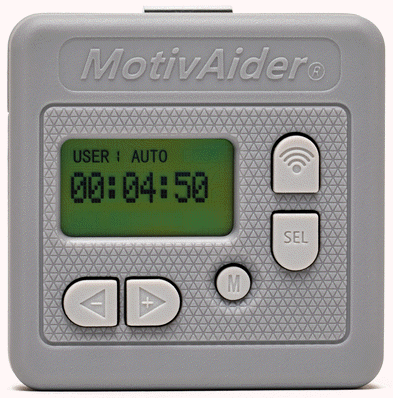
The MotivAider improves athletic performance by allowing athletes to control their own mental state.
The MotivAider automatically keeps the athlete's attention riveted on virtually any chosen performance objective or goal. It can be used to keep the athlete focused on a particular thought, image, feeling, motive, or instruction.
The Efficient Way to Create Winning Habits
The MotivAider is an incredibly efficient way to systematically create performance-boosting habits. In addition to enabling athletes to control their own mental state during physical practice or play, the MotivAider can be used to automatically prompt mental rehearsal throughout the day.
How it Works

The MotivAider uses a private signal — an adjustable pulsing vibration — to periodically focus the athlete's attention on virtually any chosen performance objective.
The signal, for example, might automatically remind the athlete to breathe slowly and deeply, swing smoothly, follow through, be aggressive, or even to imagine an appreciative home crowd.
The MotivAider keeps the athlete's attention focused on just one performance objective at a time so that the deisred change quickly becomes second nature. Once it does, the athlete can move on to the next performance objective.
Amazingly Easy to Use
To use the MotivAider, the athlete simply follows these steps:
- Assign a personal meaning or message to the MotivAider's signal
- Set the MotivAider to send the signal — and therefore the message — as often as required to get the best results.
The MotivAider Enables Athletes to:
- Quickly and consistently implement changes in technique and mental state.
- Single-mindedly focus on improving one aspect of performance at a time. Experiment with performance-enhancing techniques and mental strategies.
- Increase "practice" by facilitating mental rehearsal throughout the day.
- Neutralize mental and physical habits that interfere with good performance.
- Control mental attitude and arousal to match the requirements of each performance situation.
The Gen5 MotivAider® is the ultimate tool for people who are truly serious about changing behavior, thinking and habits. At $64.50 (less with our generous quantity discounts), it comes with a 30-day satisfaction guarantee, a 3-year warranty and free expert support to help you get great results.

— Dr. Jim Taylor, Sport Psychologist "... a very powerful tool."
— Dr. Robert Nideffer, Sport Psychologist
See how the MotivAider can help you improve your golf game
 is the registered trademark of Behavioral Dynamics, Inc., the originator of the MotivAider.